was wondring if alto can run track in “flyover” or “raised” tracks, basically conrete/steel spans supported by minimal ground impact, like these examples:
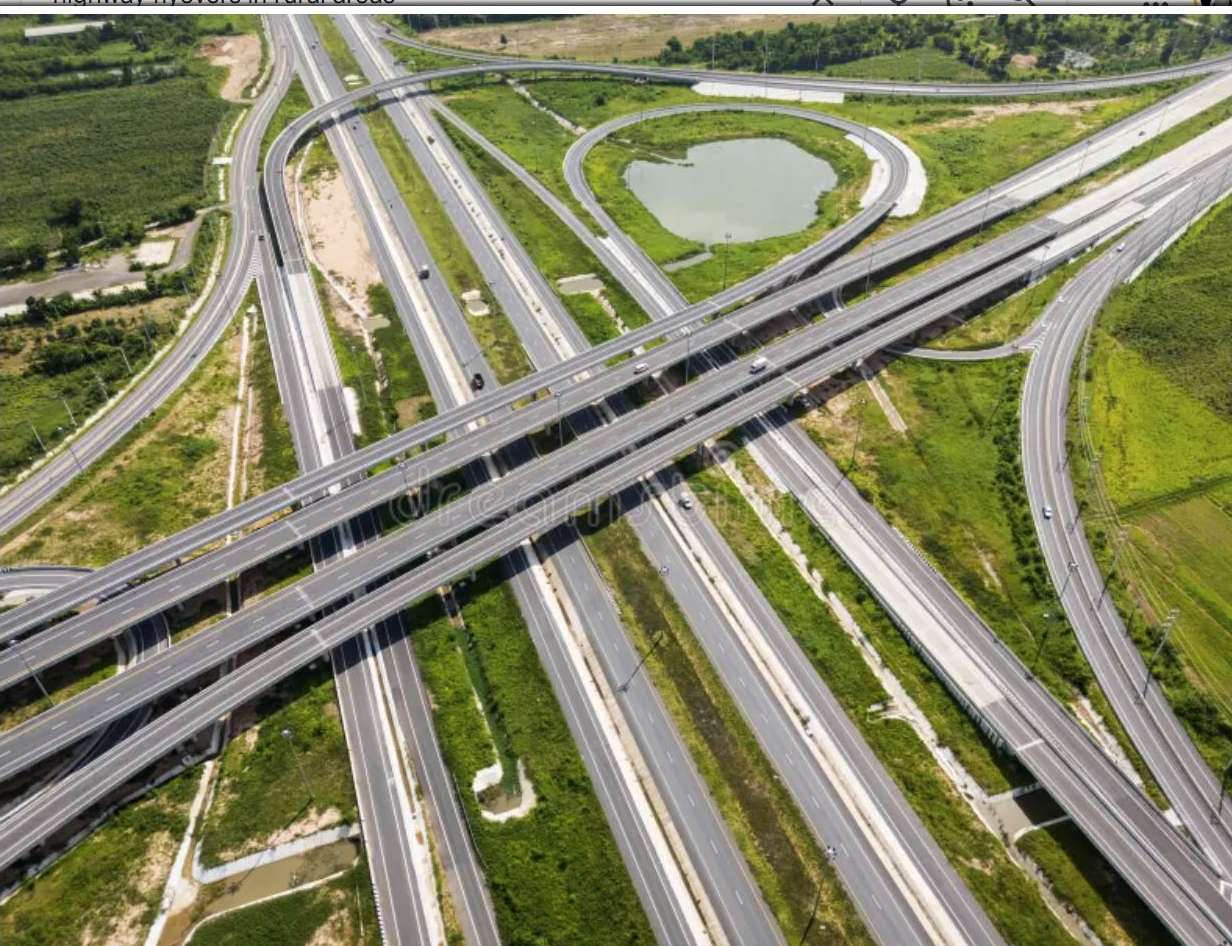
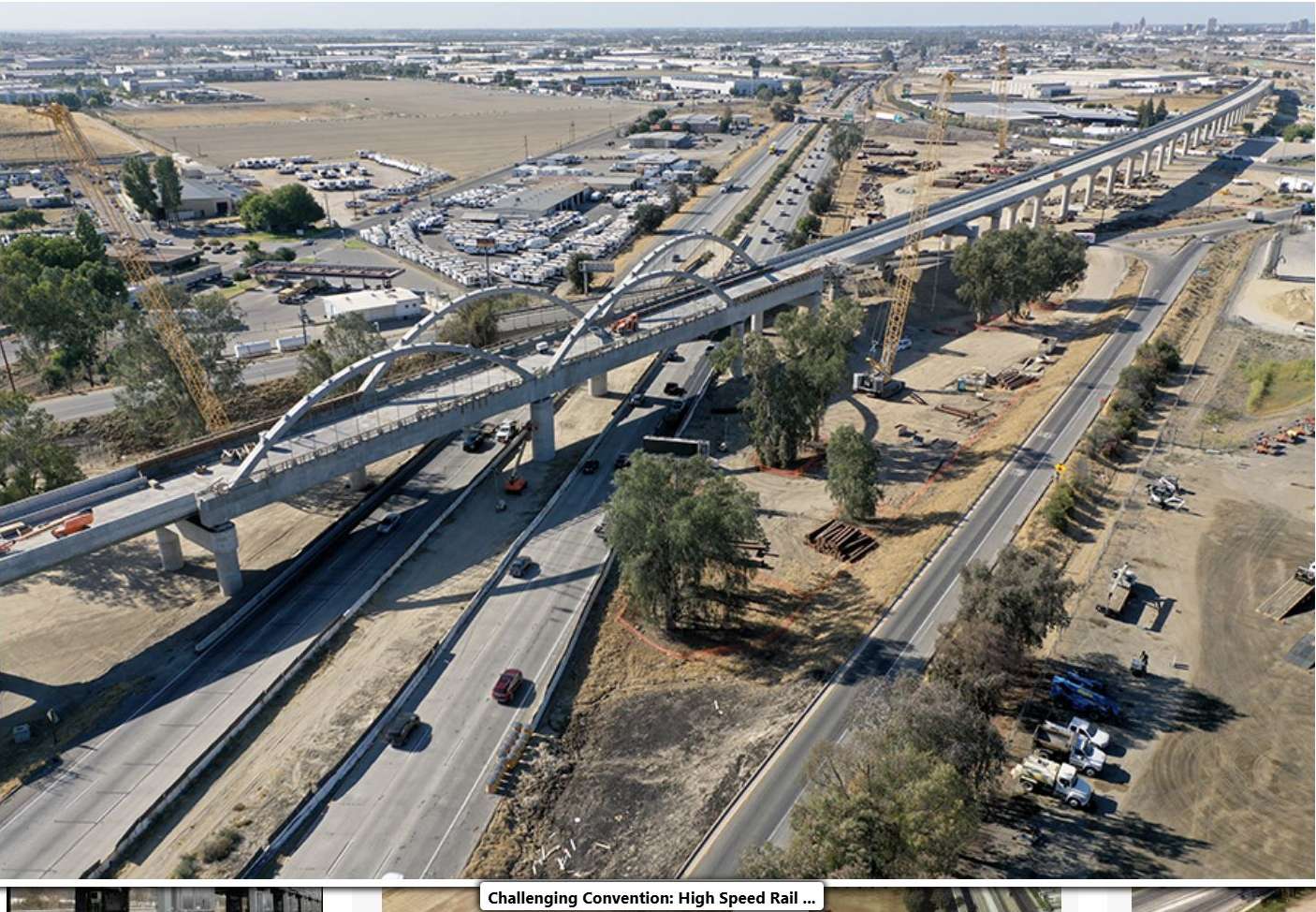
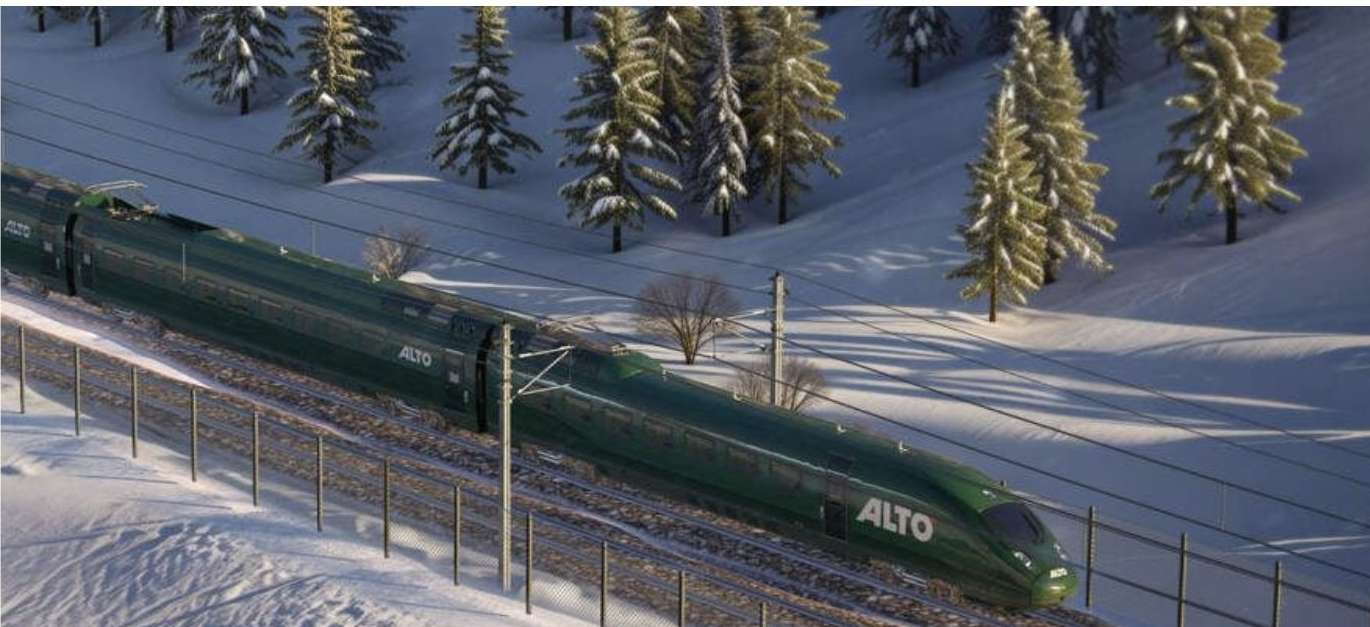
bashed this into the s.o.c. file:
for alto high speed rail hsr objections to losing farmland, just build flyover style for those that objkect. seize appropriate just that land required to trencd/pillars/spans then return the space between the pillar bases as easements back to the farmer.
what is lost space due to pillar bases?
save on fencing, security just need anti clilbing guards on illars.
what is cost/km of fenced track on proper bed with wiring, fencing, monitoring on ground vs. raised flyovers on pillars that minimaze ground use, high enought to fit the biggest tractor machines
a few google searches revealed this study from alberta; it mentions raised tracks and comes up with 4-6x cost of ground-laid tracks.
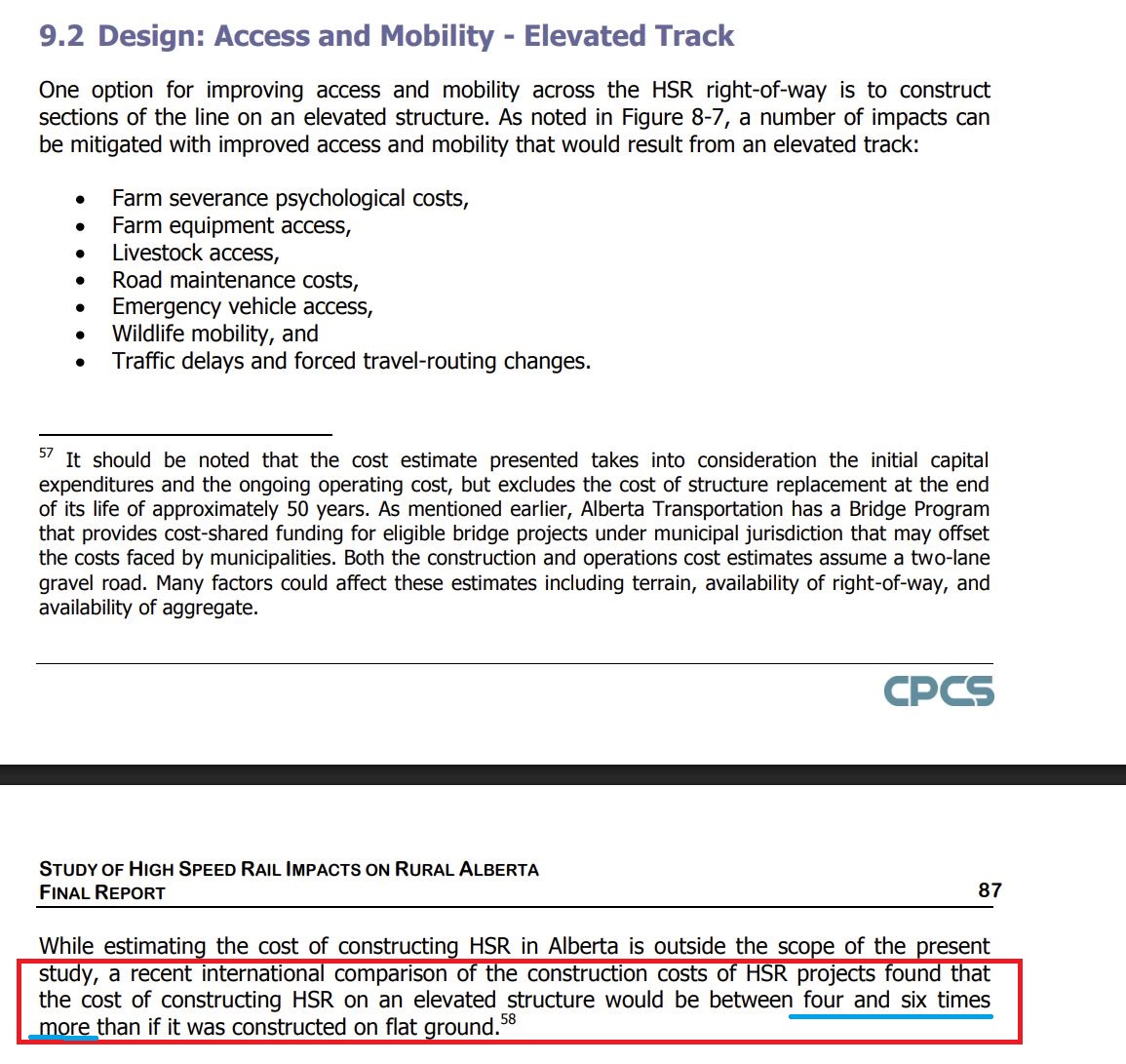
”<—
One option for improving access and mobility across the HSR right-of-way is to construct
sections of the line on an elevated structure. As noted in Figure 8-7, a number of impacts can
be mitigated with improved access and mobility that would result from an elevated track:
Farm severance psychological costs,
Farm equipment access,
Livestock access,
Road maintenance costs,
Emergency vehicle access,
Wildlife mobility, and
Traffic delays and forced travel-routing changes.
57 It should be noted that the cost estimate presented takes into consideration the initial capital
expenditures and the ongoing operating cost, but excludes the cost of structure replacement at the end
of its life of approximately 50 years. As mentioned earlier, Alberta Transportation has a Bridge Program
that provides cost-shared funding for eligible bridge projects under municipal jurisdiction that may offset
the costs faced by municipalities. Both the construction and operations cost estimates assume a two-lane
gravel road. Many factors could affect these estimates including terrain, availability of right-of-way, and
availability of aggregate.
STUDY OF HIGH SPEED RAIL IMPACTS ON RURAL ALBERTA
FINAL REPORT
87
While estimating the cost of constructing HSR in Alberta is outside the scope of the present
study, a recent international comparison of the construction costs of HSR projects found that
the cost of constructing HSR on an elevated structure would be between four and six times
more than if it was constructed on flat ground.58
”<—
but i wonder: is this a full accounting? no fences, easier secuity, precious farlmand is preserved, paul mentioned concrete has high maintenance costs, but raised should eliminate fencing, bed materials (i think rails can be just secured to the concrete with j-bolts or something,m would be interesting to see how other hsr tracks on concrete spans are secured),
would be interesting to read the report the reference, but the “58” at the end of tha para is a lie, it goes nowwhere. quick browse of the file didn’t reveal an index or other list 58+ entries long. need to dig deeper…